Showing posts with label Science. Show all posts

Wednesday, June 18, 2025

Lab-Grown Organs ๐Ÿ’ž๐Ÿงก?


What Are Lab-Grown Organs?

Lab-grown organs, also known as bioengineered organs or organoids, are human tissues and organs cultivated in laboratories using stem cells, 3D bioprinting, and tissue engineering. According to a 2023 study in Nature Biotechnology, this field aims to:

  • Mimic natural organ structures

  • Function like real organs when transplanted

  • Eliminate immune rejection (since they’re grown from the patient’s own cells)

"We’re not just building organs—we’re rebuilding lives."
— Dr. Anthony Atala, Wake Forest Institute for Regenerative Medicine

How Are They Made?

  1. Stem Cell Harvesting – Cells are taken from the patient (often from skin or blood).

  2. Scaffold Formation – A biodegradable 3D structure guides tissue growth.

  3. Cell Culturing – Stem cells differentiate into the needed cell types (heart, liver, kidney, etc.).

  4. Maturation – The organ develops in a bioreactor that mimics body conditions.


๐Ÿ’ก Breakthroughs in Lab-Grown Organs

✅ Success Stories So Far

Lab-Grown Skin – Used for burn victims (FDA-approved since 2021).
Bladders – Successfully implanted in patients with bladder disease.
Mini-Brains (Organoids) – Used for drug testing and neurological research.
Tracheas – Custom-grown windpipes have saved patients with severe damage.

๐Ÿš€ Cutting-Edge Research

  • 3D Bioprinting Hearts – Researchers at Tel Aviv University printed a miniature heart with blood vessels in 2023.

  • Lab-Grown Kidneys – Scientists at Harvard have grown functional kidney tissue in labs.

  • Liver Patches – Lab-grown liver cells can temporarily support failing livers.


⚙️ How Close Are We to Full-Scale Organ Transplants?

Current Status

OrganDevelopment StageExpected Timeline
SkinAlready in use (FDA-approved)Now
BladderClinical trials successful2025+
HeartEarly animal trials2030+
KidneyLab-grown tissue functional2035+
LiverPartial lab-grown patches2030+

According to Dr. Robert Langer (MIT), *"We’re about 10-15 years away from fully transplantable lab-grown complex organs."*


⚠️ Challenges & Ethical Concerns

Scientific Hurdles

๐Ÿ”น Vascularization – Growing blood vessels inside lab organs remains difficult.
๐Ÿ”น Long-term Functionality – Ensuring organs last decades, not just years.
๐Ÿ”น Cost & Scalability – Currently expensive; needs mass-production solutions.

Ethical Debates

๐Ÿ”ธ "Designer Organs" – Could this lead to genetic enhancements?
๐Ÿ”ธ Regulation – How should lab-grown organs be tested and approved?
๐Ÿ”ธ Accessibility – Will they be affordable for everyone?


๐Ÿ”ฎ The Future of Lab-Grown Organs

What’s Next?

๐Ÿ”น Bioprinting On-Demand Organs – Hospitals may have organ printers.
๐Ÿ”น Personalized Cancer Treatments – Lab-grown tumor models for drug testing.
๐Ÿ”น Anti-Aging Applications – Replacing aged organs to extend lifespan.

"In 20 years, organ donors may no longer be necessary."
— Dr. Jennifer Lewis, Harvard Wyss Institute


❓ FAQs About Lab-Grown Organs

Q: Are lab-grown organs safe?

A: So far, lab-grown skin and bladders have been successfully transplanted with minimal complications. More complex organs are still in testing.

Q: How much does a lab-grown organ cost?

A: Currently, very expensive (up to $500,000+), but prices should drop with mass production.

Q: Can you grow a whole human in a lab?

A: No—only individual organs or tissues. Growing an entire human is science fiction (and ethically prohibited).

Q: Will this eliminate animal testing?

A: Partially—organoids can replace some drug testing, but not all.


๐Ÿ“š References & Citations

  1. Atala, A. (2023). "The Future of Organ Manufacturing." Nature Biotechnology.

  2. NIH Report (2024). "Progress in Bioengineered Organs."

  3. Langer, R. (MIT, 2023). "Challenges in 3D Bioprinting." Science Journal.

  4. FDA Guidelines (2023). "Regulation of Lab-Grown Tissues."

Saturday, May 24, 2025

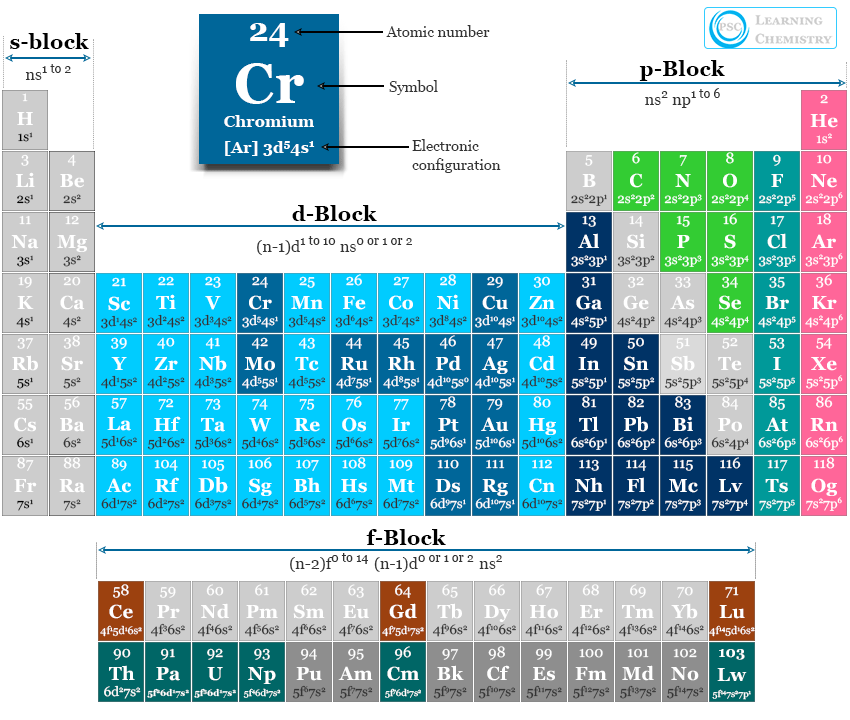
Basics: s,p,d,f Learning electron configurations by Technology

 Use Technology to Learn electron configurations

1. Interactive Simulators and Calculators

These tools allow you to visualize the filling of orbitals and verify your answers.

  • PhET Interactive Simulations ("Build an Atom"): While not exclusively for electron configuration, the "Build an Atom" simulation by PhET Colorado (phet.colorado.edu/en/simulation/build-an-atom) is excellent for understanding the basic structure of an atom, including adding electrons to shells. It's a great starting point to grasp the concept of electrons occupying specific regions.
  • Electron Configuration Calculators: Websites like omnicalculator.com/chemistry/electron-configuration allow you to input an element and instantly get its electron configuration, including orbital notation and even shorthand noble gas notation. These are fantastic for checking your work and seeing patterns.
  • Yukod Software (Electron Config Lite/Pro Apps): These apps (available on Google Play, likely also iOS) are designed as electron configuration tools. They offer:
    • An engine that predicts electron configurations based on Aufbau principle, Hund's Rule, and Pauli Exclusion Principle.
    • Lists of elements with their configurations.
    • Orbital animations: This is particularly helpful for visualizing the s,p,d,f orbital shapes and how electrons fill them.
    • Quizzes and exercises to test your understanding.

2. Video Tutorials

Visual explanations can often clarify complex topics better than text alone.

  • Khan Academy: Khan Academy (khanacademy.org/science/chemistry/electronic-structure-of-atoms/electron-configurations-jay-sal/) offers a comprehensive series of videos on electron configurations, covering:
    • Introduction to electron configurations.
    • Electron configurations for different periods.
    • How to use the periodic table to determine configurations (crucial for understanding the blocks).
    • Practice exercises to apply what you've learned.
  • YouTube Channels: Many chemistry educators have excellent video series. Search for "electron configuration spdf explained," "Aufbau principle," "Hund's rule," and "Pauli exclusion principle" to find detailed lessons with visual aids. Channels like CrashCourse Chemistry, The Organic Chemistry Tutor, or specific university chemistry departments often have high-quality content.

3. Online Courses and Educational Platforms

For a more structured learning experience, consider online courses.

  • Khan Academy Chemistry: As mentioned, their chemistry section has a dedicated unit on electron configurations, complete with videos, practice problems, and articles.
  • BYJU'S and Chemistry LibreTexts: These educational websites (byjus.com/chemistry/electron-configuration/ and chem.libretexts.org/Courses/Valley_City_State_University/Chem_115/Chapter_2%3A_Atomic_Structure/2.4_Electron_Configurations) provide detailed explanations, diagrams, and examples of electron configurations, often alongside quizzes or practice questions. While not always "interactive simulators," they offer well-organized textual and visual content.
  • Other MOOC Platforms (Coursera, edX, etc.): Search for introductory chemistry courses. Many of these courses will cover atomic structure and electron configurations as a fundamental topic, often including video lectures, interactive exercises, and discussion forums.

4. Virtual Labs and Interactive Activities

Some platforms offer more "hands-on" virtual experiences.

  • MEL VR Science Simulations: While a paid subscription service, MEL Science  offers VR lessons that might include interactive simulations of electron configurations, allowing you to manipulate elements and see electron filling in a virtual environment. This can be highly immersive.
  • LabXchange: This platform (labxchange.org/library/items/lb:LabXchange:5ef71653:html:1) offers virtual lab experiences and learning resources, including modules on electron configurations. These often integrate text, videos, and interactive elements to guide you through the concepts.

Tips for Effective Learning with Technology:

  • Mix and Match: Don't rely on just one tool. Use videos for initial understanding, simulators for visualization and practice, and calculators for verification.
  • Active Learning: Don't just watch passively. Pause videos, try to predict the next step in a simulation, and complete all practice problems.
  • Take Notes: Even with digital resources, taking physical or digital notes helps solidify understanding.
  • Understand the "Why": While the diagonal rule is a great mnemonic, try to understand the underlying principles (Aufbau, Pauli, Hund's) and how energy levels interact. The periodic table's structure is also a powerful technological "tool" for predicting configurations.
  • Check for Exceptions: Use online resources to identify and understand the common exceptions to the Aufbau principle (e.g., Chromium and Copper).


The Basics: What are s,p,d,f?

These letters represent different types of atomic orbitals, which are regions around the nucleus where electrons are most likely to be found. Each type of orbital has a specific shape and can hold a certain maximum number of electrons:

  • orbitals:
    • Shape: Spherical
    • Number of orbitals per energy level: 1
    • Maximum electrons: 2 (1 orbital x 2 electrons/orbital)
  • orbitals:
    • Shape: Dumbbell-shaped (3 mutually perpendicular dumbbells, like x, y, and z axes)
    • Number of orbitals per energy level: 3
    • Maximum electrons: 6 (3 orbitals x 2 electrons/orbital)
  • orbitals:
    • Shape: More complex (mostly cloverleaf-shaped)
    • Number of orbitals per energy level: 5
    • Maximum electrons: 10 (5 orbitals x 2 electrons/orbital)
  • orbitals:
    • Shape: Even more complex
    • Number of orbitals per energy level: 7
    • Maximum electrons: 14 (7 orbitals x 2 electrons/orbital)

Rules for Electron Configuration

To write an electron configuration, you follow three main rules:

  1. Aufbau Principle (Building Up Principle): Electrons fill atomic orbitals of the lowest available energy levels before occupying higher energy levels.
  2. Pauli Exclusion Principle: Each orbital can hold a maximum of two electrons, and these two electrons must have opposite spins (represented by and ).
  3. Hund's Rule: When electrons occupy degenerate orbitals (orbitals of the same energy level, like the three p orbitals), they will first occupy each orbital singly with parallel spins before any orbital gets a second electron with opposite spin.

The Energy Level Filling Order (The Diagonal Rule / Raindrop Rule)

This is the trickiest part for beginners, but there's a visual mnemonic to help.

Method 1: The Diagonal Rule (or Raindrop Rule)

  1. Write down the orbitals in rows:

    • 1s
    • 2s 2p
    • 3s 3p 3d
    • 4s 4p 4d 4f
    • 5s 5p 5d 5f
    • 6s 6p 6d
    • 7s 7p
  2. Draw diagonal arrows: Start from the top right and draw diagonal arrows downwards and to the left, through the orbitals. Follow the path of the arrows.

        1s  <-- (Start here)
       /
    2s  2p
     /  /
    3s  3p  3d
     /  /  /
    4s  4p  4d  4f
     /  /  /  /
    5s  5p  5d  5f
     /  /  /
    6s  6p  6d
     /  /
    7s  7p
    

    Following the arrows, the order is:

Method 2: Understanding the Energy Levels (More Conceptual)

While the diagonal rule is great for memorization, it's also good to understand why this order exists. The energy of an orbital generally increases with the principal quantum number (n) and the azimuthal quantum number (l).

  • s corresponds to
  • p corresponds to
  • d corresponds to
  • f corresponds to

The "effective energy" of an orbital is roughly related to . When values are the same, the one with the lower n value is usually lower in energy.

Let's look at a few common "cross-overs":

  • vs. :
    • 3p:
    • 4s: Since both have , 3p (with lower n) comes before 4s.
  • vs. :
    • 4s:
    • 3d: Here, 4s (with ) is lower in energy than 3d (with ), so 4s fills before 3d. This is the most common point of confusion.

Steps to Write an Electron Configuration

Let's do an example: Oxygen (O)

  1. Find the atomic number: Oxygen's atomic number is 8. This means a neutral oxygen atom has 8 electrons.
  2. Follow the Aufbau principle using the filling order:
    • Start with 1s: Can hold 2 electrons. Remaining: . Configuration: 1s2
    • Next is 2s: Can hold 2 electrons. Remaining: . Configuration: 1s22s2
    • Next is 2p: Can hold up to 6 electrons. We have 4 left. Configuration: 1s22s22p4
  3. Check the total electrons: . Correct!

So, the electron configuration for Oxygen is 1s22s22p4.

Another Example: Iron (Fe)

  1. Atomic Number: Iron is 26. So, 26 electrons.
  2. Fill according to the order:
    • 1s2 (2 electrons left: 24)
    • 2s2 (2 electrons left: 22)
    • 2p6 (2 electrons left: 16)
    • 3s2 (2 electrons left: 14)
    • 3p6 (2 electrons left: 8)
    • 4s2 (2 electrons left: 6)
    • 3d6 (All 6 remaining electrons go here)
  3. Check: . Correct!

Electron configuration for Iron: 1s22s22p63s23p64s23d6

Note: For transition metals like Iron, it's common practice to write the configuration with orbitals of the same principal quantum number grouped together, even if they filled in a different order. So, is also acceptable and sometimes preferred for showing valence electrons.

Visualizing Orbitals (Orbital Diagrams)

Sometimes you'll be asked to draw orbital diagrams, which show individual electrons and their spins.

For Oxygen ():

  • : ↑↓ (one box, two electrons)
  • : ↑↓ (one box, two electrons)
  • : ↑↑↑↓ (three boxes for px,py,pz; apply Hund's Rule: one electron in each box with parallel spin first, then pair up)

Common Exceptions

Be aware that there are some exceptions to the Aufbau principle, especially with d and f block elements, usually when the electron configuration can achieve a more stable state (half-filled or completely filled subshells).

  • Chromium (Cr) (Expected: , Actual: )
  • Copper (Cu) (Expected: , Actual: )

These exceptions occur because a half-filled (d5) or completely filled (d10) d-subshell has extra stability.

Tips for Learning:

  • Practice, Practice, Practice: The more you write configurations, the more natural it becomes.
  • Use the Periodic Table: The blocks of the periodic table directly correspond to the s, p, d, and f orbitals being filled.
    • Groups 1-2: s-block
    • Groups 13-18: p-block
    • Transition Metals: d-block
    • Lanthanides & Actinides: f-block
  • Flashcards: Make flashcards for the filling order.
  • Draw it Out: Physically drawing the diagonal rule helps many learners.
  • Online Quizzes/Tools: Many websites offer interactive electron configuration practice.

Electron Configuration: s, p, d, f Orbitals

Orbital Type

Shape

Max Electrons

Electron Configuration Example

s

Spherical

2

1s², 2s²

p

Dumbbell

6

2p⁶, 3p⁶

d

Cloverleaf

10

3d¹⁰, 4d¹⁰

f

Complex/Multilobed

14

4f¹⁴, 5f¹⁴


Thursday, May 22, 2025

25 amazing facts about the human body

How is intelligent design of Allah's creation ! SubhanAllah  ุณُู€ุจْุญุงู†َ ุงู„ู„ู‡ !  Allah is Perfect

  1. The Brain's Powerhouse: Your brain generates about 12-25 watts of electricity – enough to power a low-wattage LED light bulb.
  2. Miles of Blood Vessels: An adult human has approximately 60,000 to 100,000 miles of blood vessels. If laid end-to-end, they would encircle the Earth multiple times!
  3. Heart's Endurance: Your heart beats about 100,000 times a day, pumping around 2,000 gallons of blood. Over a lifetime, it's enough to fill three supertankers.
  4. Bone Strength: Per pound, bone is stronger than steel. A block of bone the size of a matchbox can support nearly nine tons of weight.
  5. Regenerating Skin: Your skin is your largest organ, and you replace your outer skin cells every 28-30 days. You shed about 30,000 to 40,000 dead skin cells every minute!
  6. Unique Fingerprints: Every person has a unique set of fingerprints, even identical twins.
  7. The Body's Own Pharmacy: Your body produces its own natural painkillers called endorphins.
  8. Super Sense of Smell: The human nose can distinguish between at least one trillion different scents.
  9. Taste Bud Turnover: You have about 10,000 taste buds, and they regenerate every 10 to 14 days.
  10. The Unstoppable Liver: The liver is the only organ that can fully regenerate. Even if 75% of it is removed, it can grow back to its original size.
  11. Stomach Acid Power: Your stomach acid is strong enough to dissolve razor blades, yet your stomach lining protects itself.
  12. Blushing's Secret: When you blush, the lining of your stomach also blushes.
  13. The Eye's Sensitivity: The human eye can distinguish approximately 10 million different colors.
  14. Cornea's Uniqueness: The cornea is the only part of the body that has no blood supply; it gets oxygen directly from the air.
  15. Muscle Power: Your jaw muscles are the strongest in your body, able to apply up to 200 pounds of pressure.
  16. Saliva Production: You produce about 1 to 1.5 liters of saliva every day – enough to fill two bathtubs a year!
  17. Sneezing Speed: A sneeze can travel at speeds of up to 100 miles per hour.
  18. The Power of Yawning: Yawning is thought to help cool down the brain and increase alertness.
  19. Dream Weaver: Even if you don't remember them, everyone dreams. We have about 3-6 dreams per night.
  20. Brain's Water Content: Your brain is about 75% water.
  21. Bone's Living Nature: Bones are living tissue, constantly being broken down and rebuilt throughout your life.
  22. The Body's Natural Thermostat: Your body maintains a remarkably constant internal temperature, thanks to complex regulatory systems.
  23. Fastest Reflexes: The blink of an eye typically lasts 100-150 milliseconds.
  24. Intricate Hand Design: Each of your hands contains 27 bones, 35 muscles, and over 100 ligaments and tendons, allowing for incredible dexterity.
  25. The Body's Cells: An adult human body is composed of an estimated 37 trillion cells, each performing specialized functions.

Cybersecurity Sales

  1. How do you sell cybersecurity to a non-technical C-suite executive? Answer: "I don't sell technology; I sell risk management....